
A mini excavator that looks right on a product sheet can still be the wrong machine for a rental fleet, landscaping contractor, or utility crew. The useful question is not simply, “What is the best mini excavator?” It is: what machine size, configuration, and support plan fit the work your customers will actually do?
For equipment dealers and importers, that decision also affects attachment demand, spare-parts planning, container loading, and the brand experience you deliver after the machine leaves your yard.
This guide gives you a practical way to compare compact excavators before you add a model to a rental fleet or private-label range.
Start with the job, not the machine size
Begin with the jobs the machine will do most often. Landscaping, utility work, and rental use can overlap, but they do not place the same demands on an excavator.
| Main application | Questions to ask before choosing a model |
|---|---|
| Rental fleet | Will first-time or occasional operators use it? Which attachments will renters request? How will you stock filters and wear parts? |
| Landscaping | What gate widths, slopes, lawns, gardens, and finished surfaces will the machine encounter? Is a compact upper structure important? |
| Utility work | What trench depth, reach, swing clearance, hydraulic attachments, and local safety requirements apply? |
| Light construction | How often will the machine load trucks, work around foundations, or operate with a breaker, auger, or grapple? |
Write down the most common job, the most restricted jobsite, and the hardest job you expect the machine to complete. A model that only matches the average task may be too limited for the work that determines customer satisfaction.
1. Measure access before comparing horsepower
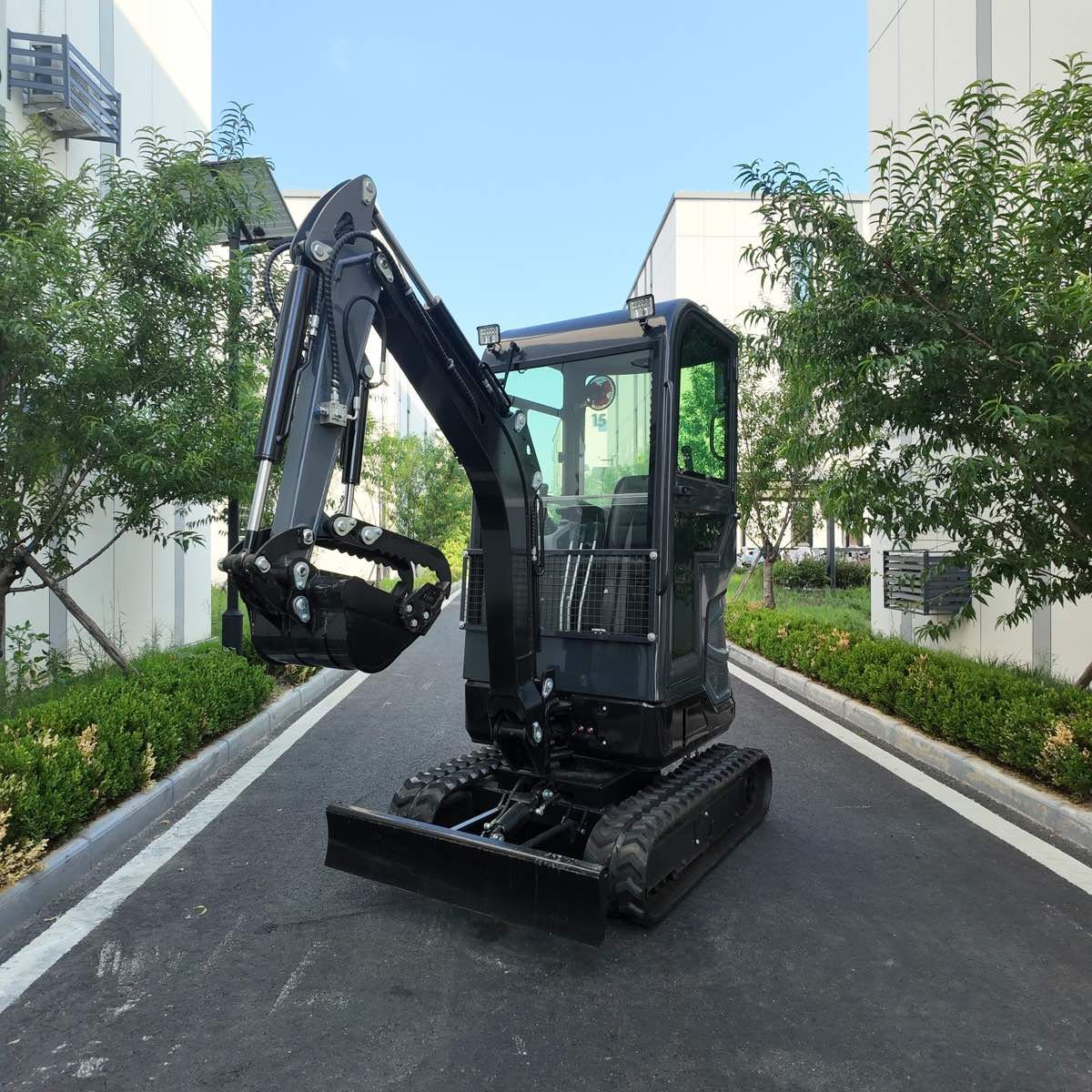
For compact excavators, access is often the first filter. Check the narrowest entrance, transport route, working corridor, and turning area your customer expects to use. Compare those measurements with the machine’s transport width, height, track configuration, tail swing, and minimum swing radius.
Zero-tail or compact-tail designs can be especially useful when a machine must work beside fences, buildings, landscaping features, or utility corridors. They do not eliminate the need for a site assessment, but they can reduce the space needed to rotate and position the machine.
For a rental fleet, publish the practical access dimensions in the rental listing. A contractor should not need to request a full technical sheet just to find out whether a machine can reach a backyard or pass through a worksite entrance.
2. Match digging depth and reach to the work you want to win
Digging depth, digging radius, and unloading height tell different parts of the story.
- Digging depth matters for drainage, irrigation, foundation preparation, and utility trenches.
- Digging radius affects how much ground can be covered without moving the machine repeatedly.
- Unloading height matters when loading spoil into a truck or skip.
- Boom swing can help operators work alongside an obstacle or keep the machine in a safer position relative to a trench.
Do not select a machine only because it has the deepest published dig depth. Confirm the bucket type, ground conditions, required trench profile, and attachment weight. For utility work, local requirements and safe-dig procedures must be confirmed before a crew begins excavation near existing services.
3. Choose a size class that fits your commercial plan
For a dealer or importer, it is often more useful to create a clear three-model ladder than to offer many machines that overlap.
1.8-ton class: access-focused compact work
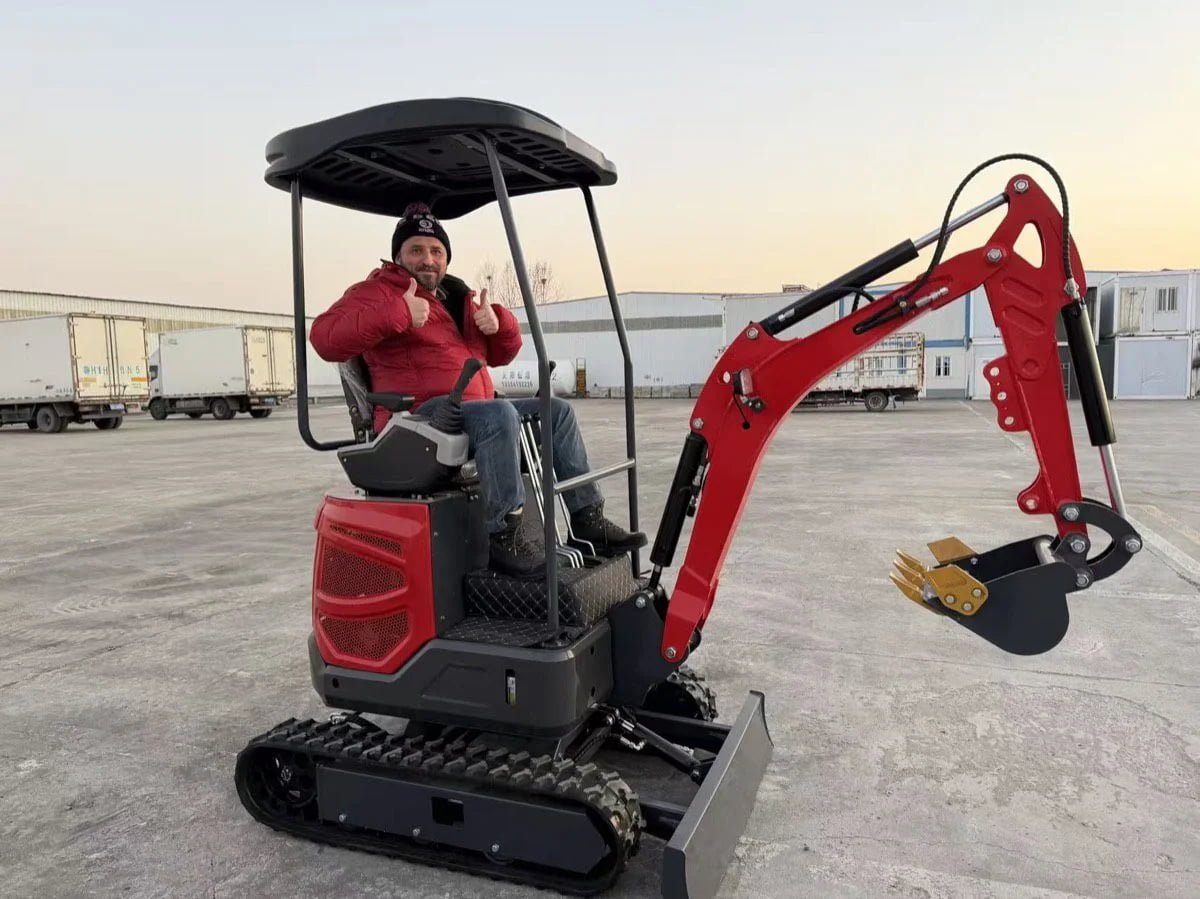
A 1.8-ton model can suit narrow-access landscaping, light digging, small property projects, and entry-level rental demand. The TerraAny TE18U is positioned for this compact-work segment and can be configured with options such as cab arrangements, tracks, hydraulic outlets, boom choices, cooling, and attachments.
Before publishing exact TE18U figures, confirm the current factory specification for engine, power, bucket capacity, standard equipment, and destination-specific emissions configuration. These items should match the approved quotation, not an older brochure.
2.7-ton class: a versatile fleet and dealer model
For buyers that need more reach and a broader attachment plan without leaving the compact segment, a 2.7-ton zero-tail model can be a practical middle position. The supplied TE25U specification lists a 2,700 kg operating weight with cab, 0.072 m³ bucket capacity, 2,605 mm maximum digging depth, 4,712 mm maximum digging radius, 1,300/1,500 mm expandable chassis, side-swing boom, and hydraulic hammer line in the quoted configuration.
That combination is relevant to rental, landscaping, and utility-oriented packages. Final configuration, emissions documentation, and destination requirements should be confirmed before ordering.
3.88-ton class: more capability for deeper or higher-output work
A 3.88-ton zero-tail model gives a dealer range a step up for customers needing more reach, bucket capacity, and working capability. The supplied TE35U specification lists a 0.11 m³ bucket, 3,071 mm maximum digging depth, 5,355 mm maximum digging radius, and 3,382 mm maximum unloading height.
This class may fit contractors and rental customers whose work has moved beyond tight-access light digging, but who still value a compact upper structure. Review the exact engine, track, cab, and emissions configuration for the destination market before making a public specification or compliance claim.
4. Treat attachments as part of the machine decision
An excavator becomes more useful when its attachments match the work customers request. Build a simple attachment plan around local demand instead of treating attachments as an afterthought.
| Attachment | Common work | What to verify |
|---|---|---|
| Narrow trenching bucket | Utility, drainage, irrigation | Required trench width, coupler fit, and hose/line protection |
| Grading or ditch bucket | Landscaping, cleanup, finish work | Width, tilt requirement, and transport fit |
| Auger | Posts, footings, planting | Hydraulic flow, bit range, and ground conditions |
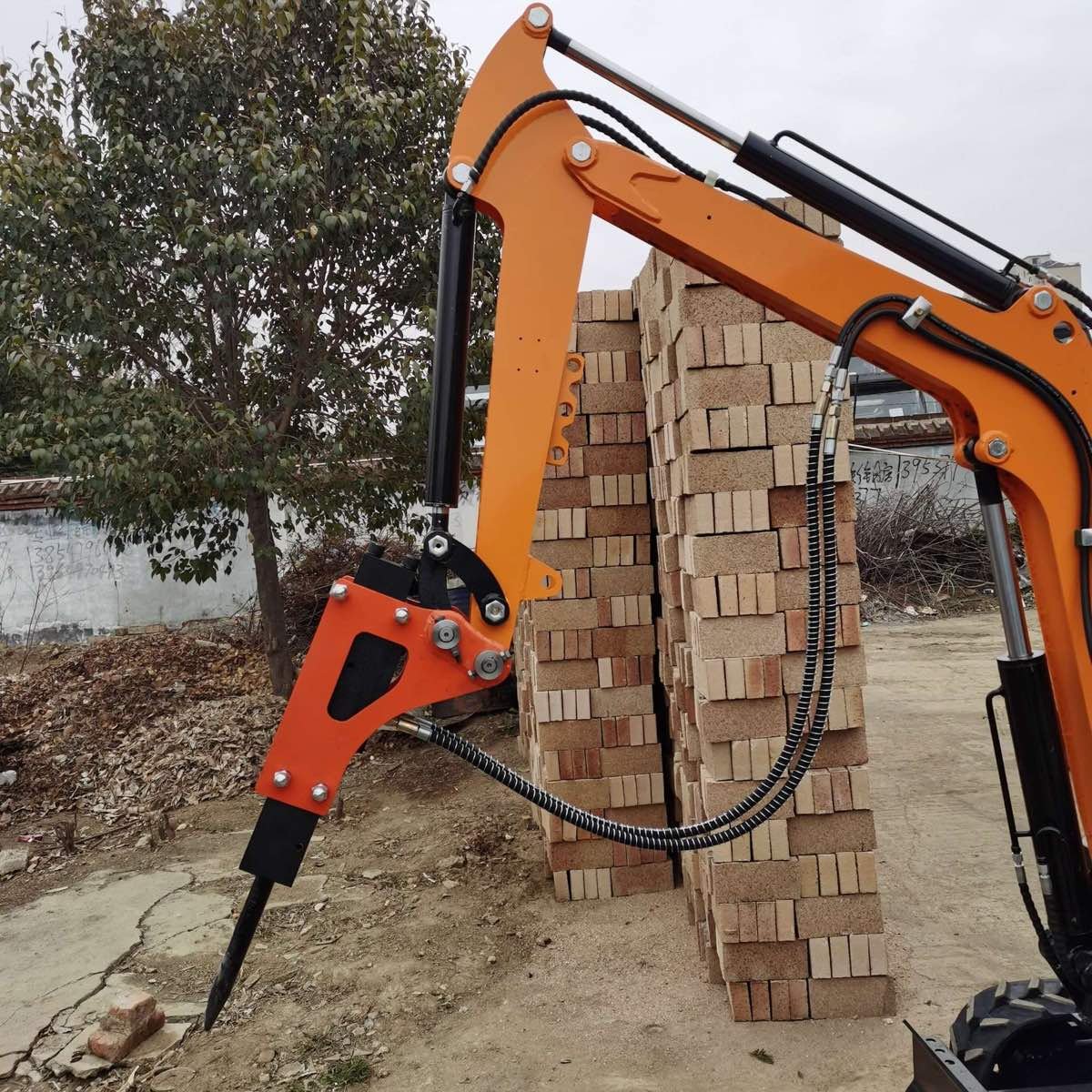
| Breaker | Light demolition and concrete removal | Hydraulic compatibility, mounting, and service interval |
| Grapple or thumb | Material handling and site cleanup | Coupler, hydraulic circuit, and load limits |
| Quick coupler | Fleets using multiple attachments | Attachment standardization, operator training, and inspection process |
For rental fleets, standardizing a limited number of compatible attachments can make staff training, parts stocking, and customer support easier. For importers, quote the attachment package together with the machine so the hydraulic configuration and container plan are confirmed before production.
5. Design for uptime, not only purchase price
The lowest purchase price does not always create the lowest operating cost. A rental fleet or dealer should consider what happens after delivery:
- Are filters, basic tools, and recommended vulnerable spare parts included or available for the first machines?
- Is the machine configuration consistent enough that technicians can support it efficiently?
- Does the supplier provide a clear warranty process for confirmed quality defects?
- Who will respond if a local dealer needs parts information or technical support?
- Can the supplier prepare a container plan that protects the machines and uses space effectively?
Support and warranty terms, including the applicable response route, parts process, working-hour limit, scope of coverage, and buyer responsibilities, are confirmed in the written quotation and contract for the selected machine and destination.
6. Check emissions, shipping, and branding before you quote
For importers, the machine itself is only part of the purchase decision. Confirm these commercial items before you advertise a model or send a final quotation:
- Destination and emissions requirement. Confirm the exact engine, configuration, documentation, and destination-market requirements. Do not assume one configuration is approved everywhere.
- Branding package. Confirm the buyer’s logo artwork, color, decals, manual language, and any required approval sample.
- Order quantity and container type. Plan around the agreed 20GP or 40HQ loading arrangement, machine configuration, and attachments.
- Incoterm and delivery scope. EXW, FOB, and any door-delivery/DDP request are different commercial scopes. Confirm the destination and written quotation before promising delivery terms.
- Payment and lead time. The standard quoted payment structure is 30% T/T down payment and 70% balance before delivery. Production and shipping timing depend on the approved configuration, order quantity, and vessel plan.
A practical mini excavator selection checklist
Before you add a mini excavator to a rental fleet or dealer range, confirm the following:
- Typical jobsite access has been measured.
- Required digging depth, reach, and unloading height are defined.
- The right size class is selected for the main jobs, not only the easiest jobs.
- Required attachments and hydraulic lines are confirmed.
- Cab, canopy, track, boom, and travel configuration are specified.
- Destination-specific emissions and import documentation are confirmed.
- The brand/color package is approved, if required.
- Warranty terms, filters, tools, and vulnerable spare-parts plan are agreed.
- Container loading, Incoterm, and delivery scope are written into the quotation.
Which TerraAny compact excavator should you discuss first?
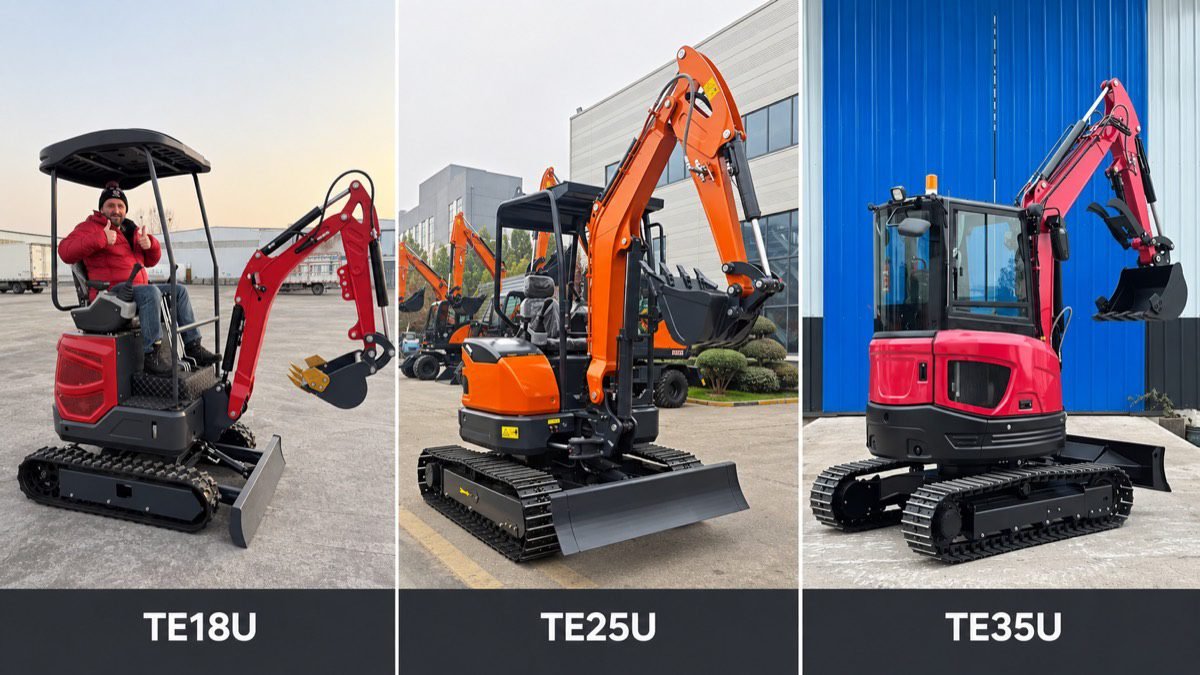
Start with the application profile, then compare the three-model range:
- Discuss TE18U for access-focused, light-duty compact work where the exact configuration can be tailored to the buyer’s market.
- Discuss TE25U when a dealer needs a versatile zero-tail model with an expandable chassis, side-swing boom, and a documented compact-work specification.
- Discuss TE35U when buyers need a larger compact option with more published digging depth, reach, and bucket capacity.
The best choice is the machine that matches the local work, service plan, and import requirements—not simply the largest machine a buyer can fit into a budget.
Request a dealer quotation
Planning a compact excavator range for rental, landscaping, or utility work? Send TerraAny your target market, expected quantity, preferred model, required configuration, and requested delivery scope. We can prepare a quote for TE18U, TE25U, or TE35U with branding, configuration, parts-package, and shipment-planning options.
Frequently asked questions
What size mini excavator is suitable for landscaping?
The right size depends on access width, digging depth, bucket needs, and the material being handled. A smaller compact model can be suitable for constrained access and lighter work, while a larger compact model may be more appropriate for deeper digging, more reach, and higher-output tasks.
Is a zero-tail mini excavator better for utility work?
Zero-tail design can be useful where swing clearance is limited. It should be evaluated alongside required digging depth, boom-swing needs, hydraulic attachments, ground conditions, and the local safe-dig process.
Can I order a mini excavator in my own color and brand?
Private-label branding, color, and selected configuration changes can be discussed for qualifying wholesale programs. Share the artwork, requested quantity, destination, and configuration so the quotation can confirm feasibility and timing.
Does every mini excavator configuration meet EPA requirements?
No. Emissions status depends on the exact engine, configuration, documentation, and destination. Confirm these details before ordering or making a public compliance claim.
Can TerraAny arrange DDP delivery?
Door-delivery or DDP requests are evaluated case by case. The destination, local import requirements, model configuration, quantity, and requested service scope must be confirmed in a written quotation.